
In this in‑depth interview, Koen Steert – Director of Product & Applications Management – discusses market trends, latest launches, the importance of innovation and sustainability in Agfa’s developments, and future plans.
What market trends influence the company’s roadmap?
Agfa’s roadmap is influenced by major changes taking place in the printing industry, with efficiency and versatility being the most important. Today’s print service providers (PSPs) face unpredictable conditions, with customers who expect increasingly faster responses and highly personalized work. The growing number of short‑run jobs negatively affects profitability, while variable costs such as energy and materials are eroding margins, which increases the emphasis on automation and resource efficiency.
In response to these conditions, demand is growing for solutions that combine speed, flexibility, and intelligent automation. This technology optimizes workflows and enables faster turnaround times, allowing PSPs to maximize their investments across a variety of applications. Sustainability and long‑term value also remain constant priorities, reflected in increasing expectations for equipment that minimizes waste and energy consumption, offers upgradeable functions, and integrates seamlessly with business workflow and automation.
These trends strongly influence Agfa’s innovation strategy. We integrate intelligent automation into our hardware and software solutions, with automated workflows, advanced job scheduling, and intuitive interfaces that help print service providers efficiently manage numerous short‑run jobs.
Secondly, we focus on offering technologies with versatile designs. Our print engines and inks are compatible with a wide range of substrates and applications, making it easier for print service providers to meet diverse customer needs without having to invest in additional systems.
Together, these innovations reinforce Agfa’s commitment to sustainable, high‑performance, automation‑ready solutions that empower print service providers in fast‑moving, high‑demand markets.
Do these launches meet a need within the sector?
These launches are a direct response to the multiple challenges faced by printers today. Throughout the printing industry, companies are working with shorter delivery times, tighter budgets, and a constant shortage of labor, while also facing pressure to meet more ambitious sustainability goals.
Each of our solutions has been developed with these realities in mind. The new Tauro and Panthera large‑format presses combine high speed and superior quality with advanced automation functions, reducing manual handling and significantly cutting waste to deliver the efficiency modern printers require. Our new Ciervo models address the growing demand for agile mid‑size hybrid printers that also offer packaging capabilities, enabling print service providers to expand into new applications without compromising productivity.
Meanwhile, the launch of Asanti 7 reflects the clear industry demand for smarter workflow tools that provide measurable sustainability metrics, offering print service providers practical insights to reduce their environmental impact while gaining greater control over production. Together, these innovations directly address the ongoing need for solutions that strengthen competitiveness by delivering agility, profitability, and sustainability.
What type of companies are these products aimed at?
Agfa’s products are designed for print service providers operating in the sign & display, point‑of‑sale, and retail graphics sectors. Our products also meet the needs of folding‑carton packaging converters who want to diversify into shorter runs and value‑added print applications, as well as industrial printing companies that require robust and versatile technology capable of handling demanding substrates and production environments.
What benefits will these innovations bring to businesses?
Agfa’s innovations are designed to deliver tangible benefits that help sign & display, exhibition, and visual communication companies become more competitive and more sustainable. Our digital technology offers unmatched flexibility to print service providers, enabling them to respond quickly to the demand for shorter runs, handle a wider range of substrates, and diversify into multiple applications without unnecessary time or cost.
Automation plays a central role in reducing production times and eliminating errors. Smart job scheduling and highly automated workflows minimize operator intervention, freeing staff to focus on higher‑value tasks while ensuring consistent accuracy in every run. This results in increased productivity and more efficient use of labor—especially important at a time when profit margins are under pressure.
With our continuous focus on sustainability, we also continually improve ink formulations to adapt to changing environmental expectations, helping customers reduce emissions and waste while maintaining durability and quality. Our goal is to help print service providers print more sustainably without compromising performance.
What innovations has your company recently introduced or plans to introduce?
Over the past year, Agfa has taken significant steps to renew and expand its inkjet product portfolio, underscoring our commitment to mastering the entire print ecosystem. From advanced presses to workflow software and more sustainable inks, our innovations focus on improving productivity, versatility, and sustainability so print service providers stay ahead in an ever‑evolving market.
In 2024, we introduced several major new platforms, such as the Anapurna Ciervo H3200 and the hybrid Jeti Bronco H3300 printer. These systems brought new versatility to mid‑ and high‑volume applications, while the roll‑to‑roll Jeti Condor expanded our offering for large‑format, high‑quality printing on flexible substrates. For packaging markets, we also introduced the SpeedSet Orca, a water‑based inkjet press that meets the demand for more sustainable production of corrugated and folding carton at high speed.
In early 2025, we expanded the Ciervo family with two additional models: the Ciervo H2500 and the compact H2050. Both models feature material‑feeding guides designed to handle perfectly flat material, ensuring consistent, high‑quality print results across a wide range of substrates.
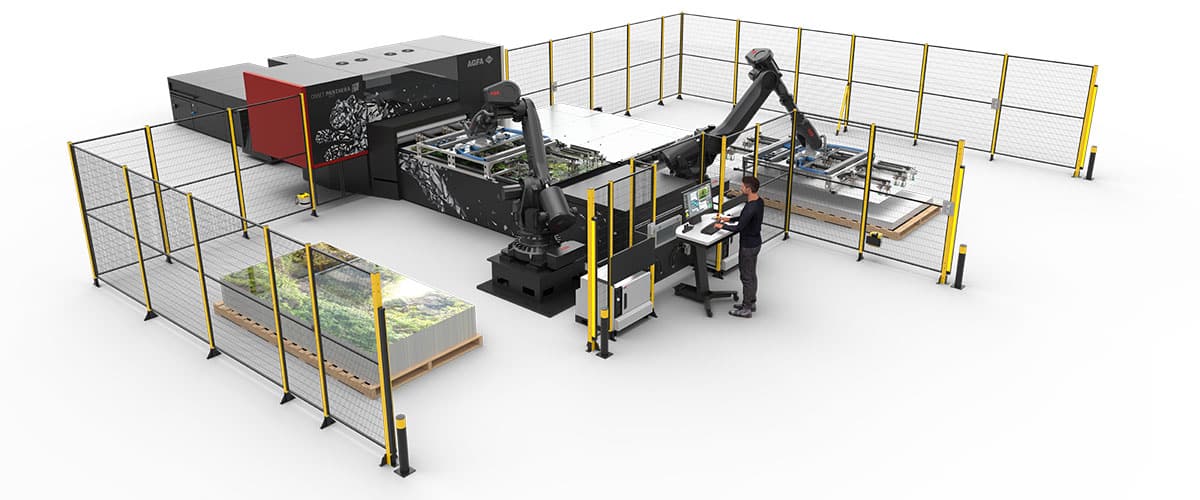
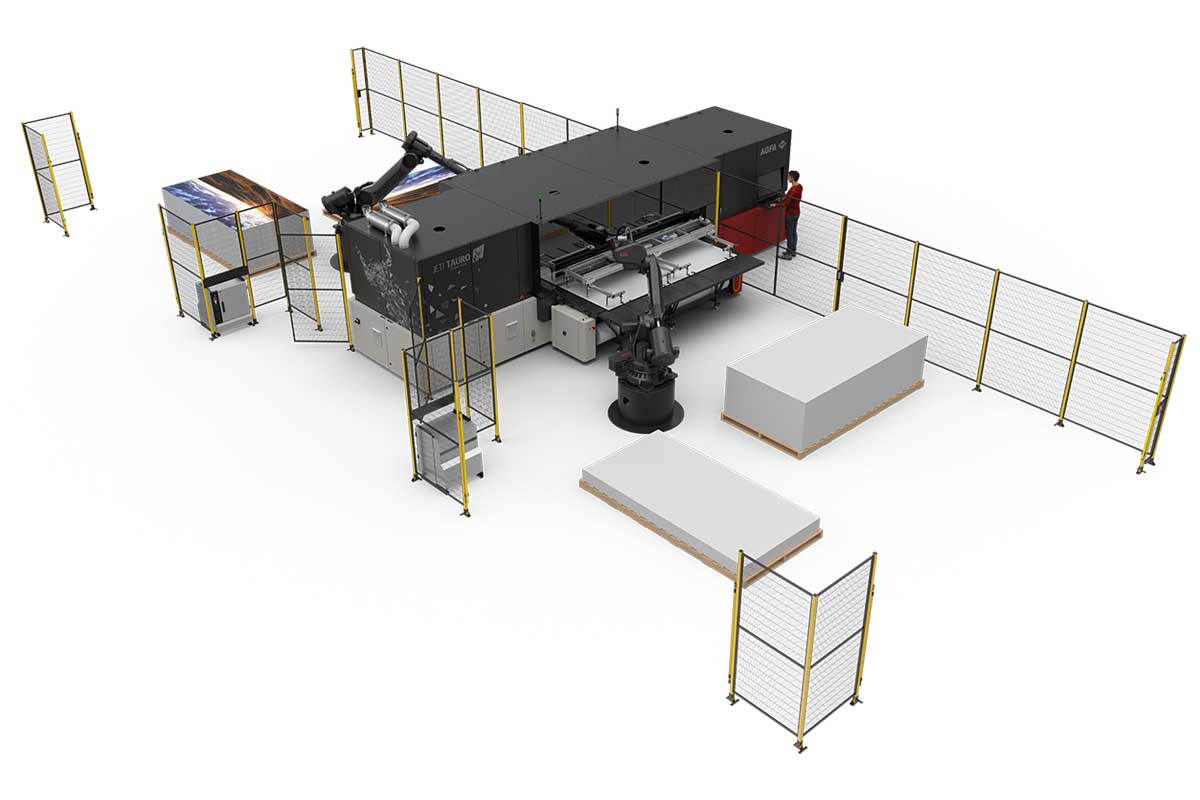
At FESPA 2025, we further expanded our portfolio with two major additions to the Agfa range. The Jeti Tauro H3300 XUHS was presented as the fastest and largest hybrid machine in the Tauro series. This press offers multiple automation options and is compatible with the new Anuvia 30 inks, offering a wider color gamut, lower environmental impact, and greater resistance to post‑press operations such as folding and creasing. We also introduced the Onset Panthera FB3216, a true large‑format flatbed machine offering high productivity, a compact footprint, and a wide range of automation features to further optimize production.
Our recent innovations have not been limited to hardware. In software, the release of Asanti 7 has added an entirely new dimension of intelligence to workflow management. Highlights include built‑in carbon footprint calculation tools for easier sustainability reporting, advanced ink‑saving algorithms to optimize resource use, and improved job planning tools that increase operational efficiency across all production environments.
With this wave of new products and new technologies, Agfa has almost completely renewed its inkjet portfolio in a very short time, laying the foundation for continued expansion into the packaging sector, greater automation in the sign & display industry, and software‑driven efficiency and sustainability for our customers.
What innovations do these new products offer?
Our latest innovations focus on redefining speed, automation, and versatility while embedding sustainability directly into print production. Each solution is designed to help print service providers achieve greater efficiency and handle more varied applications with ease.
The Jeti Tauro H3300 XUHS, winner of the Pinnacle Product Award, sets a new standard in hybrid printing with market‑leading speeds of up to 1280 m²/hr. The machine includes extended vacuum zones and motorized support guides to ensure maximum control on rigid and flexible substrates. With optional varnish and primer capabilities, this press also opens the door to value‑added finishes, thanks to Anuvia 30 inks, making it ideal for display and corrugated packaging applications. Integration of MAX BOTS, Agfa’s award‑winning robotic loading/unloading system, further enhances productivity, while the MAX Flex RTR module extends the Tauro’s versatility into roll‑to‑roll production.
The Onset Panthera FB3216 marks another milestone in flatbed print technology, achieving record speeds of 1514 m²/hr while maintaining consistent quality in just two passes. Its ductile, satin, and gloss finishes expand its application range, while the Anuvo LED curing reduces energy consumption by up to 80%. Equipped with an auto‑guiding system and robotic unloading capability, the Panthera becomes a fully automated platform capable of managing high‑volume production with unparalleled efficiency.
The Anapurna H2500 and H2050 expand Agfa’s hybrid platform into the packaging and point‑of‑sale market with improved feeding guides and higher productivity to satisfy the proliferation of SKUs and the diverse demands of customers. In addition, Asanti 7 software introduces a new level of sustainability and workflow intelligence. Its integration with Dataline’s MultiPress enables full tracking of resource usage and environmental performance, while advanced automation features—such as job organization, substrate recipes, and ink optimization—significantly enhance efficiency and cost control.
Reducing waste represents another major advantage of Agfa technology. Agfa’s digital presses use precise ink deposition to avoid unnecessary overspray, while thin‑ink‑layer technology ensures less ink is needed to achieve the vibrant results customers expect. Combined with LED curing systems, which consume far less energy than conventional alternatives, this technology helps print service providers reduce production costs and environmental impact.
Integrated workflow tools such as Asanti 7 bring an entirely new dimension by providing measurable carbon‑footprint data, giving companies the information and evidence they need to support their sustainability objectives.
Consistency and versatility are also key differentiating factors. Agfa solutions offer uniform quality on both rigid and flexible substrates, enabling companies to confidently expand into adjacent markets such as retail displays, packaging prototypes, or point‑of‑purchase materials. High‑reliability presses designed for continuous operation ensure print service providers can meet tight deadlines without compromising uptime. With upgradeable functions and long system lifespans, our equipment also ensures long‑term return on investment and production sustainability as customer needs evolve.
Is sustainability considered in your innovation processes?
Yes, sustainability is integrated throughout Agfa’s entire innovation process and portfolio. We consider sustainability a core principle that shapes how we design and develop our solutions. Rather than treating it as a separate initiative, we ensure that every part of our chain (hardware, software, inks, and services) works together to help print service providers operate more sustainably.
Our printers are designed to last, with long lifespans that allow customers to extend their value over time and even benefit from second‑life applications instead of premature replacement. In our inks, we prioritize eco‑certified formulations that meet strict safety standards. Combined with our thin‑ink‑layer technology, our inks allow print service providers to achieve sharp, consistent results while reducing overall waste.
In software, our Asanti workflow platform actively contributes to sustainability through intelligent automation. The latest version, Asanti 7, integrates carbon‑footprint tracking along with algorithms that optimize ink and substrate usage. Complementing hardware and software, our service offering leverages IoT‑based remote diagnostics, which significantly reduces the need for on‑site visits and associated emissions while ensuring machines maintain optimal performance.
Together, these elements create a connected ecosystem in which every part amplifies the sustainability benefits of the others. This synergy enables Agfa customers to enhance their environmental responsibility as an essential part of achieving greater efficiency, profitability, and long‑term value.
What are your plans for the near future?
Agfa will continue its accelerated innovation cycle from 2025 onward. Our mission remains to offer a complete ecosystem of printers, inks, software, and services that ensures customer adaptability and growth in an unpredictable environment.
We are committed to providing productive, versatile, and more sustainable solutions based on three interconnected pillars: large‑format inkjet innovation, development of sustainable inks, and seamless workflow integration. Our R&D teams are dedicated to pushing the boundaries of inkjet technology, ensuring our solutions are future‑ready and capable of delivering new levels of performance for print service providers.
Looking ahead, Agfa will keep investing in strengthening our integrated solutions approach so that customers can rely on a cohesive and scalable platform rather than isolated products. As markets evolve, this approach will enable print service providers not only to remain competitive but also to anticipate future trends and seize new opportunities with confidence.
-686x446.jpg "Driving sustainable performance: How Agfa is empowering print service providers for the future")